


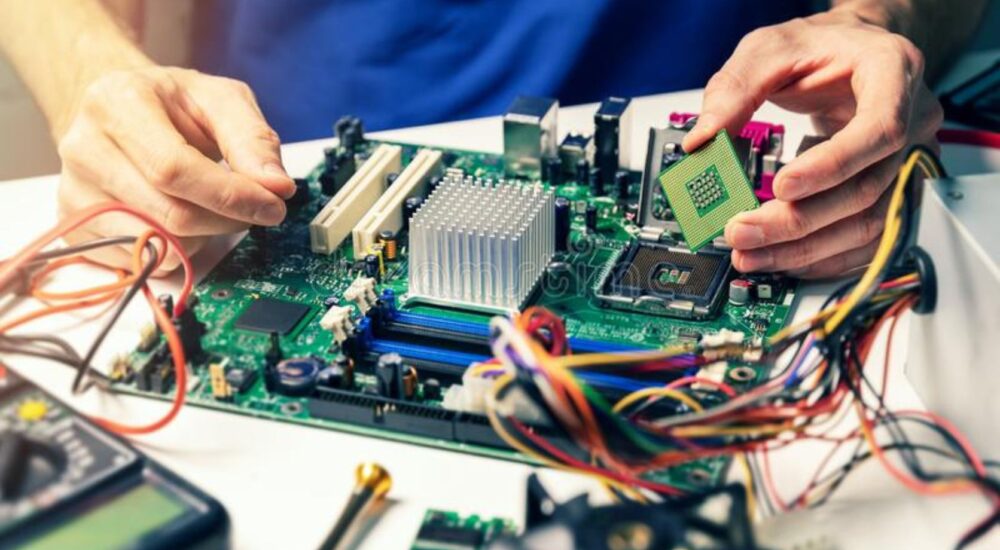
Computers and networks are fundamental components of modern offices, educational institutions, businesses and technology environments. From desktop computers and printers to switches, routers and wireless networks, organizations depend on IT infrastructure every day.
A computer hardware and networking course can help students understand how computer systems are assembled, maintained and connected.
What Is Computer Hardware and Networking?
Computer hardware includes physical components such as processors, memory, storage devices, motherboards, power supplies and peripherals. Networking focuses on connecting computers and other devices so they can communicate and share resources.
A combined hardware networking course can introduce learners to both areas, providing a foundation for entry-level IT support and networking-related learning.
Topics Covered in Hardware and Networking Training
A structured course may cover:
- Computer hardware fundamentals
- Operating system installation
- Hardware troubleshooting
- Peripheral devices
- LAN and WAN concepts
- IP addressing
- Network cables and connectivity
- Switches and routers
- Wireless networking
- Basic network security
- Network troubleshooting
- System maintenance
Practical training is particularly important because students need opportunities to understand how hardware components and network devices work in real environments.
Understanding Networking Fundamentals
Networking knowledge provides a foundation for more advanced IT learning. Cisco’s current CCNA curriculum covers network fundamentals, network access, IP connectivity, IP services, security fundamentals, automation and programmability.
Cisco’s training also includes practical concepts such as configuring routers, switches, VLANs, routing, troubleshooting, wireless fundamentals and network security.
Who Should Take a Hardware Networking Course?
A computer hardware and networking course can be useful for students, graduates, beginners and professionals who want to develop practical IT knowledge.
It can also provide a starting point for learners who later want to study networking certifications, cybersecurity, cloud computing or IT infrastructure.
Choosing Networking Training in Jaipur
When selecting networking training in Jaipur, students should look at the course syllabus, practical lab facilities, trainer experience, troubleshooting exercises and learning support.
A practical approach can help learners move beyond memorizing definitions and understand how networks and computer systems actually operate.
Build Your IT Foundation
Hardware and networking knowledge remains useful across many technology environments. Strong fundamentals can help learners understand computers, network infrastructure and troubleshooting before progressing to specialized areas.
For students searching for a computer networking institute in Jaipur, a course that combines theory with practical learning can provide a structured way to develop essential IT skills.
Source: Cisco official CCNA training and certification resources.